

by Gerri Lewis
Designed by Kia Lawrence - Central Connecticut State University
You wouldn’t give your card info to a stranger, would you? So don’t type it into a strange link.
hoever said that crime doesn’t pay had it wrong. Fraudulent schemes designed to separate you from your money are on the rise. According to Ridgefield Police Captain Jeffrey Smith, Ridgefield residents lost over $3 million to scams – mostly on the internet - in the last three years. He expects that number to jump to an estimated $4.5 million in 2025.
SCAM!!!
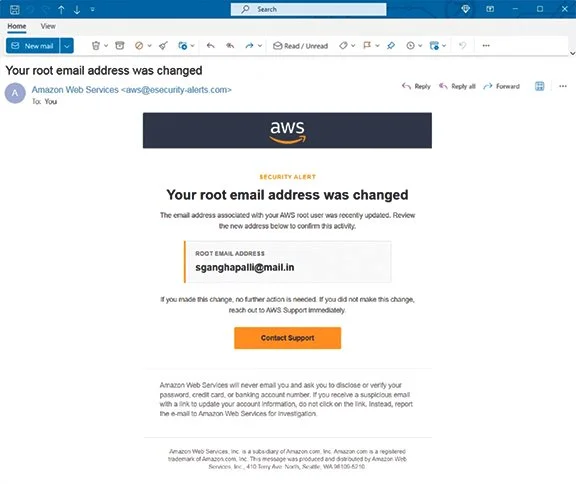
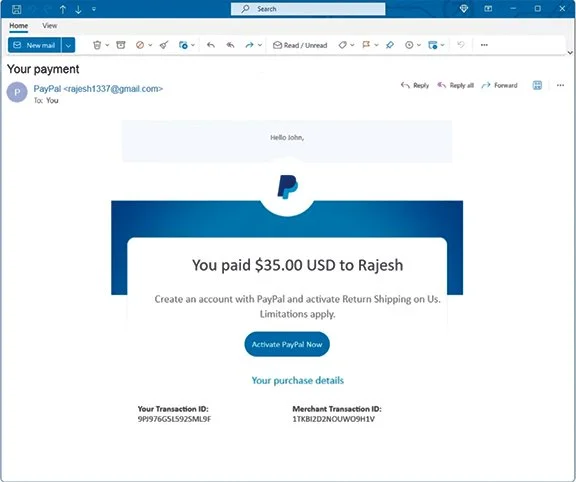
If my email, texts, and robocalls are to be believed, the police are about to come knocking at my door for tax evasion; my car will soon be impounded for dodging toll booths; and iCloud is going to wipe out my photos unless I update my credit card. I also received emails from fans lauding me as the next James Patterson. They asked for a link to my Amazon account, so they can leave a rave review to increase my sales. I pasted that email into ChatGPT, which reported that it was an AI-generated letter—one I now know I should not have opened.
SCAM!!!
The problem is that emails usually come from plausible-looking addresses, and the real address might be hidden behind one that is familiar to you. Mike Ingber, owner of Upward Business Systems, a computer consulting business, regularly teaches internet safety. His tip: hover your cursor over the email address to reveal the real sender’s information.
One scam that did give me pause was a Wells Fargo fraud alert in my email, followed by a “customer service call” on our landline. Fraudsters can “spoof” a phone number, and that, along with the alert, looked so legit, I went scurrying to my bank statement, where I found real contact information. Bottom line, don’t even trust the caller ID.
Captain Smith says that bank fraud has wiped out local residents of hundreds of thousands of dollars. He echoes the advice of so many—never respond to unsolicited email, texts, or pop-ups and never, ever, click on links or call phone numbers provided in an unsolicited message.
“Sadly, there are just so many different scams that even during my presentations, I have to pick and choose which ones to review,” says Detective Victoria Ryan, who educates various groups about fraud. While all ages fall victim, she says that the older population is often more vulnerable, especially to cons like the romance or impersonation scams that use emotional manipulation.
Years ago, my in-laws thought they were bailing their grandson out of a Mexican jail. Today, AI can clone a loved one’s voice so convincingly that it’s hard to ignore the plea for help. The grandparent scam is just one version of the many impersonation scams that remain right up there with investment and banking fraud.
My in-laws paid $3000 via Western Union. Today scammers ask for everything from money transfers to gift cards and in some cases, a live person pick-up at your doorstep—these are all red flags that you’re being scammed.
Fraudsters don’t only want to steal your money or information. Detective Ryan warns they may try to move funds through your account, essentially asking you to “launder” their money. Another sure sign of fraudulent behavior is if they ask you to lie to the bank teller about where your funds are going.
Andrew Neblett, Ridgefield’s IT director and author of The Municipal I.T. and Cybersecurity Handbook, keeps a long list of common schemes. Phishing emails posing as banks or agencies, fake websites with “too good to be true” deals, tech support pop-ups demanding remote access, and crypto get-rich-quick schemes are all common. Neblett says to trust nothing and test everything. “The weakest link in Cybersecurity is you,” he says. “The strongest link in Cybersecurity can be you.”
Ingber concurs. “Be skeptical, don’t open unsolicited emails or pop-ups, and keep your virus and computer systems up to date.” •
If you or someone you know is a victim of a scam, contact your local police department or report it to: reportfraud.ftc.gov