

Beloved Composer’s Connection to Danbury Area
by Michele Lee Amundsen
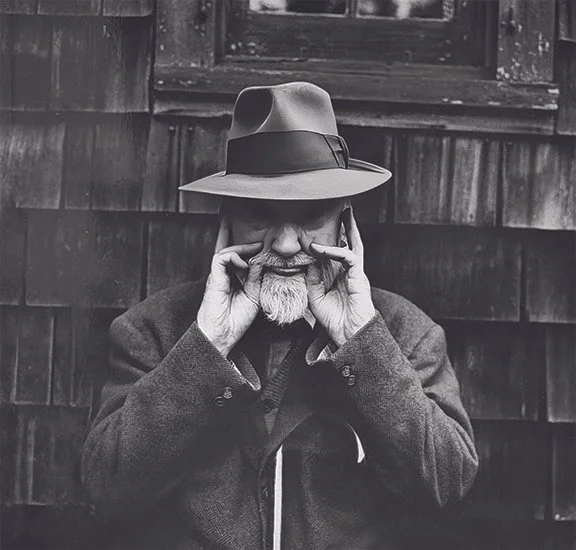
Connecticut State Composer, Pulitzer Prize winner, and musical iconoclast Charles Edward Ives was born into a prominent New England family in Danbury, Connecticut, on October 20, 1874. His ancestry can be traced back to the founding families of the colony of Connecticut. More than six generations of Ives’s forebears had called the colony, and then state, of Connecticut home before Charles made his appearance on the family tree.
Remembrance and a strong sense of home and place are meaningful and recurring motifs in Ives’s compositions. The tolling of the Danbury church bells he heard as a child, the clip-clop of horse hooves on Main Street in front of the old Ives House, baseball games and brass bands, and the hymns and patriotic tunes he grew up hearing his father play, all left indelible impressions and are part of the genius of Charles Ives.
The old Ives House in Danbury (c 1790) was purchased by Charles’s great-grandfather, Isaac Ives, in 1829. A former school building, it was repaired, painted, and enlarged to house several generations of the Ives family as well as their staff. The original part of the home was already nearly a century old when Charles was born there to George E. and Mary Elizabeth (Mollie) Ives. Always intended to be a multi-generational family seat, it was generally filled with cousins, nieces, and aunts of various descriptions moving in and out as circumstances required. It was remembered as a lively home that “smelled of beeswax, fruit, and lilies” in the summer, and as an Ives cousin would say, it was an “expandable house.” Expandable, and mobile, too: it moved from Main Street in Danbury up the hill to Chapel Place (1924), and then to Rogers Park (1966), and finally to its present location on Mountainville Avenue (1971).
George Edward Ives, Charles’s father, was perhaps the single greatest musical influence upon his life. George, who died in 1894, was a very gifted musician, band leader, and teacher in his own right. Charles would say, “One thing I am certain of is that, if I have done anything good in music, it was, first, because of my father, and second, because of my wife.”
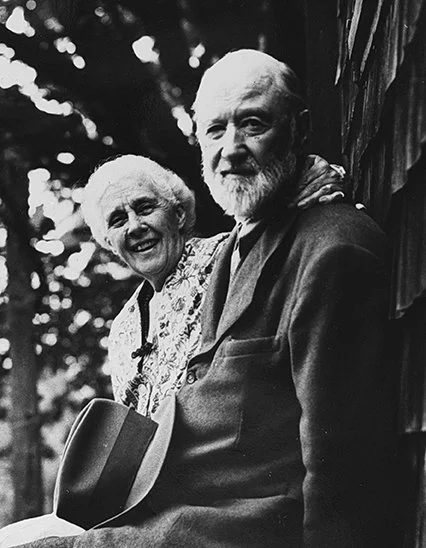
Sarah Wilcox Ives, Charles’s grandmother, would instill in him the tenets of Thoreau’s and Emerson’s Transcendentalist philosophy: individualism, passionate creativity, and a deep, abiding connection to nature and the land. These values remained with Ives throughout his life, informing and helping to create some of his greatest musical achievements.
Pine Mountain (near Ridgefield, and part of the present day Ives Trail) was a much loved place for Ives. And, at least in the early 1900s, on a clear day you could see all the way to Long Island Sound from its peak. Charles and his brother J. Moss Ives constructed a small structure - more lean-to than cabin - and would hike to it and spend weekends there in the spring and summer. Parts of several notable compositions are dated and marked Pine Mountain in the margins, so it was also fertile ground for composing and sketching out new music.
In 1908, Charles married Harmony Twichell, the sister of a Yale classmate, and the daughter of one of Mark Twain’s closest friends, Reverend Joseph Hopkins Twichell.
In 1912, the couple bought a piece of land not far from Danbury in West Redding, from which Charles could still commute to the Ives & Myrick insurance office in Manhattan. In the coming years, a comfortable home and barn were built on the property and other small structures were added over time. The Iveses would remain in the country from late spring through the fall, and they would return to Manhattan for the winter. Harmony and Charles cherished their bucolic home life in West Redding.
Today, the old Ives House is part of the Danbury Museum, and the West Redding Ives home is privately owned.
Looking for Charlie? Walk the Ives Trail or listen closely to the quotidian sounds of your town, he’s there. In the truest sense, the rolling hills, iconic white steeples, and steady habits of Connecticut are threads that are deeply woven into the lasting musical legacy of Charles Edward Ives. •